
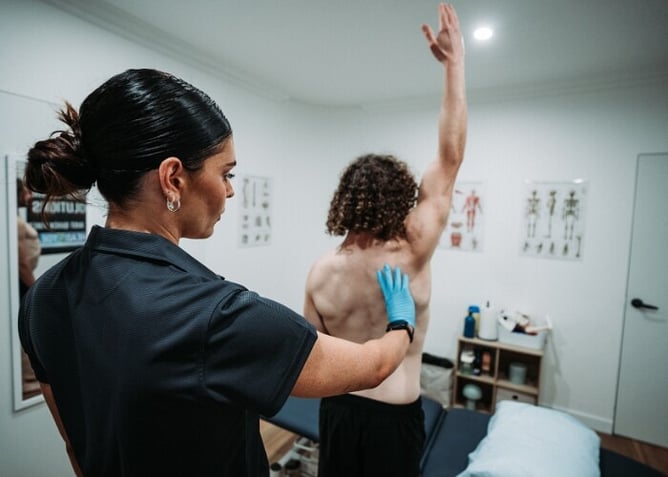
Does your shoulder hurt when you reach into an overhead cupboard, put on a shirt or lie on your side at night? Perhaps you have noticed discomfort at the gym, when swimming, playing tennis or carrying groceries.
These symptoms are commonly associated with rotator cuff-related shoulder pain - one of the most frequent causes of shoulder problems in adults.
Shoulder pain can significantly affect your sleep, work, exercise and quality of life. However, experiencing shoulder pain does not necessarily mean you have serious structural damage or require surgery.
Understanding what is contributing to your symptoms and identifying an appropriate treatment plan can help you return to the activities you enjoy.
What is the rotator cuff?
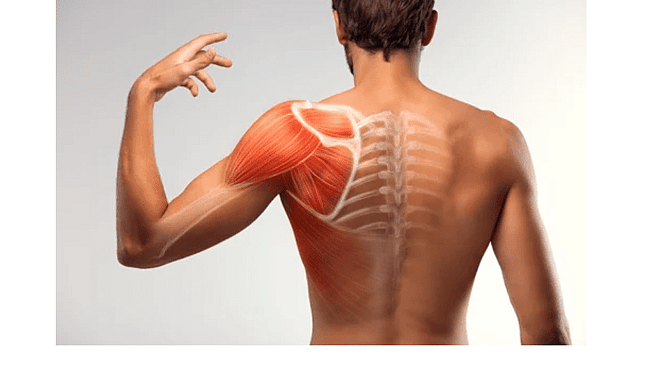
The rotator cuff is a group of four muscles and their associated tendons that surround the shoulder joint:
• Supraspinatus
• Infraspinatus
• Teres minor
• Subscapularis
Together, these muscles help stabilise the shoulder joint, rotate your arm and control movement during lifting, reaching and sporting activities.
The shoulder is one of the most mobile joints in the human body. This mobility allows us to perform complex movements but also requires coordination and strength from the surrounding muscles.
When the demands placed on the shoulder exceed its current capacity, pain and reduced function can develop.
What are the symptoms of a rotator cuff injury? Common symptoms of rotator cuff-related shoulder pain include:
• Pain when lifting your arm above shoulder height.
• Pain around the outside of the shoulder or upper arm.
• Difficulty sleeping on the affected side.
• Pain when reaching behind your back.
• Discomfort when putting on clothes.
• Weakness when lifting or carrying objects.
• Pain during swimming, throwing or overhead gym exercises.
Symptoms may develop gradually over several weeks or months, or following a specific injury.
These symptoms can also occur with other shoulder conditions, which is why an individual assessment is important.
Why does my shoulder hurt when I sleep?

Night-time shoulder pain is a common and particularly frustrating symptom of rotator cuff-related conditions.
Lying directly on a sensitive shoulder may increase pressure on the surrounding tissues. Certain sleeping positions can also place additional stress on the shoulder.
Poor sleep and persistent pain can influence one another, potentially making symptoms more difficult to manage. Some simple strategies that may help include:
• Sleeping on your unaffected side.
• Supporting your affected arm with a pillow.
• Sleeping on your back with a pillow underneath your elbow and forearm.
• Temporarily avoiding positions that consistently aggravate your symptoms.
Persistent night pain should be assessed, particularly if it is severe, unrelated to movement or accompanied by other unexplained symptoms.
What causes rotator cuff-related shoulder pain?
Rotator cuff problems are rarely caused by one factor alone. Several factors may contribute to the development of symptoms.
Sudden increases in physical activity
Returning to the gym, increasing swimming distances, renovating your home or spending a weekend gardening can place unfamiliar demands on your shoulder.
Repetitive overhead activities
Tradespeople, painters, swimmers, tennis players and other individuals who frequently work or exercise overhead may experience shoulder symptoms.
Age-related tendon changes
Tendons naturally change as we age. These changes do not automatically cause pain, and many people have structural abnormalities without experiencing symptoms.
Reduced shoulder strength or capacity
When the shoulder's ability to tolerate physical demands is reduced, everyday activities may become more challenging.
Traumatic injuries
A fall, sudden lifting injury or sporting accident can result in a rotator cuff tear. Significant weakness following an accident requires prompt assessment.
Is shoulder bursitis the same as rotator cuff tendinopathy?
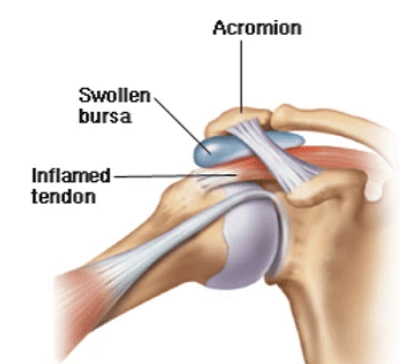
Not exactly, although these conditions can occur together and produce similar symptoms.
Rotator cuff tendinopathy affects the tendons of the rotator cuff, whereas subacromial bursitis involves irritation or inflammation of the bursa, a small fluid-filled structure that helps reduce friction around the shoulder.
The term shoulder impingement has also traditionally been used to describe pain associated with these structures.
Modern research recognises that shoulder pain is more complex than simply a tendon being pinched between two bones.
Rather than focusing exclusively on one anatomical structure, rehabilitation often addresses the shoulder's overall strength, movement, load tolerance and function.
Do I need an ultrasound or MRI for shoulder pain? Not everyone with shoulder pain requires a scan.
An important consideration is that tendon changes and even rotator cuff tears can be present in people who have no shoulder pain.
A 2025 systematic review published in the Journal of Orthopaedic & Sports Physical Therapy identified rotator cuff imaging abnormalities in individuals without shoulder symptoms, although the certainty of prevalence estimates was limited.
This means an abnormal ultrasound or MRI does not necessarily explain the severity of your symptoms.
For many people with gradually developing shoulder pain, a thorough clinical assessment is an appropriate first step.
Imaging may be useful when a significant tear is suspected, following trauma, when considerable weakness is present or when symptoms are not improving despite appropriate management.
Your physiotherapist can help determine whether further investigation or referral is appropriate.
What is the best treatment for rotator cuff pain?
1. Exercise-based rehabilitation
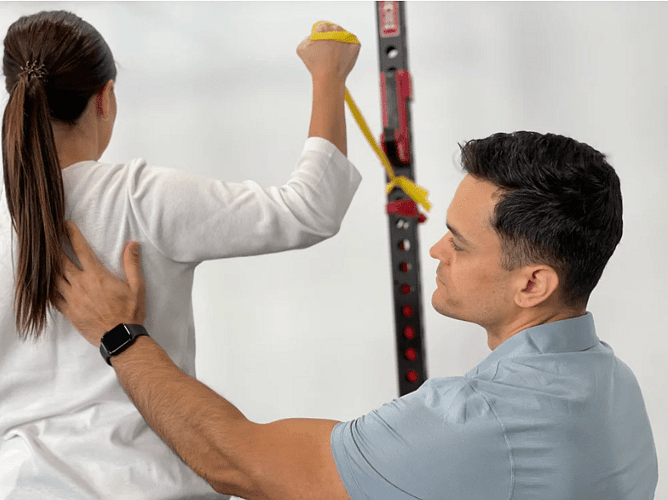
Current scientific evidence supports exercise as a central component of initial treatment for rotator cuff tendinopathy.
The 2025 clinical practice guideline published in the Journal of Orthopaedic & Sports Physical Therapy recommends active rehabilitation as an initial treatment approach.
Depending on your presentation, rehabilitation may include:
• Rotator cuff strengthening.
• Shoulder blade muscle strengthening.
• Mobility exercises where movement is restricted.
• Gradually increasing resistance and functional activities.
• Sport-specific or work-specific rehabilitation.
The type, intensity and progression of exercise should be tailored to your symptoms, physical capacity and personal goals.
There is no single exercise program that is appropriate for everyone.
2. Modifying activities rather than completely resting
Completely avoiding shoulder movement is not necessarily the best approach for gradually developing rotator cuff pain.
Temporarily reducing activities that significantly aggravate your symptoms, while maintaining tolerable movement, can be a useful strategy.
For example, someone experiencing shoulder pain during overhead gym exercises may initially benefit from reducing their training weight, modifying their range of movement or selecting alternative exercises.
The longer-term objective is to progressively rebuild the capacity required for work, exercise and everyday activities.
3. Hands-on physiotherapy
Manual therapy, including joint mobilisation and soft tissue techniques, may provide short-term symptom relief for some individuals.
It can be used alongside rehabilitation exercises, rather than replacing the active components of treatment.
4. Cortisone injections
Corticosteroid injections can provide temporary relief in some cases of rotator cuff-related shoulder pain. However, are they an effective long-term solution?
The GRASP trial, a large randomised controlled trial involving 708 participants published in The Lancet in 2021, found that corticosteroid injections did not provide additional long-term benefits for patients with rotator cuff disorders.
Injections may be considered in selected circumstances following discussion with your treating healthcare professional, particularly when symptoms significantly interfere with daily activities.
An injection does not, by itself, rebuild shoulder strength or physical capacity.
Does a rotator cuff injury require surgery?
Many people with rotator cuff-related shoulder pain can be managed without surgery.
A 2025 study published in BMJ reported the 10-year outcomes of the FIMPACT trial, which compared subacromial decompression surgery with placebo surgery and exercise therapy.
The researchers found no meaningful long-term advantage from subacromial decompression surgery for subacromial pain syndrome.
However, this should not be confused with surgical repair of a significant rotator cuff tear.
Some traumatic or substantial full-thickness tears may require an orthopaedic opinion, especially when there is considerable weakness or loss of function.
The appropriate management pathway depends on the nature of the injury, your symptoms, functional requirements and response to treatment.
How long does a rotator cuff injury take to recover?
Recovery varies considerably between individuals.
Some people notice improvements within several weeks, while others require several months of progressive rehabilitation.
Factors influencing recovery include:
• The nature and severity of the injury.
• How long symptoms have been present.
• Occupational and sporting demands.
• General health and sleep quality.
• Consistency with rehabilitation.
• The shoulder's response to increasing exercise demands.
Recovery should be assessed not only by pain levels but also by improvements in strength, movement, sleep and the ability to perform meaningful activities.
When should you see a physiotherapist for shoulder pain?
Consider arranging an assessment if your shoulder pain:
• Continues to interfere with everyday activities.
• Regularly disrupts your sleep.
• Limits your ability to exercise or work.
• Is associated with ongoing weakness or reduced movement.
• Continues to return despite periods of rest.
Seek urgent medical assessment following a significant injury with sudden weakness, inability to lift your arm or visible deformity, or if the shoulder is hot and swollen and you have a fever.
Shoulder pain accompanied by chest pain, shortness of breath, sweating or nausea may require emergency medical attention. Call Triple Zero (000) if you suspect a medical emergency.
Shoulder pain treatment at Connect Physiotherapy
At Connect Physiotherapy, our approach to shoulder rehabilitation focuses on understanding the individual factors contributing to your symptoms and developing a treatment plan based on your needs and goals.
Your physiotherapy assessment may include:
• A detailed history of your injury and symptoms.
• Assessment of shoulder movement and strength.
• Screening for neck-related or other potential causes of pain.
• Identification of contributing work, sporting or lifestyle factors.
• Development of an individualised rehabilitation program.
• Referral for further investigation when clinically indicated.
Whether your goal is returning to the gym, swimming, playing sport, working comfortably or simply getting a better night's sleep, your rehabilitation can be tailored to the activities that matter to you.
Do not let persistent shoulder pain unnecessarily limit the activities you enjoy.
Book a physiotherapy assessment with Connect Physiotherapy to discuss your symptoms and appropriate treatment options.
Frequently asked questions
Can a rotator cuff injury heal without surgery?
Many rotator cuff-related conditions can improve with non-surgical treatment. Improvements in pain and function are possible even when structural tendon changes remain. Significant tears may require specialist assessment.
Should I exercise with shoulder pain?
Appropriately modified exercise is often beneficial for rotator cuff-related pain. The appropriate exercises and intensity depend on your injury and how your symptoms respond.
Does shoulder pain mean I have a torn rotator cuff?
No. Shoulder pain may arise from several conditions, including tendinopathy, bursitis, joint problems or pain referred from the neck.
Is massage good for rotator cuff pain?
Massage and other manual therapy techniques may help temporarily relieve symptoms. A comprehensive rehabilitation program will generally also include appropriate exercise.
Can I go to the gym with rotator cuff pain?
In many cases, you can continue exercising with suitable modifications. Adjusting exercises, resistance and movement range may allow you to remain active while managing your shoulder symptoms.
Will a cortisone injection fix my shoulder pain?
Cortisone injections may provide short-term symptom relief, but research has not demonstrated sustained long-term benefits for typical rotator cuff disorders.
Scientific references
1. Desmeules F, Roy JS, Lafrance S, et al. (2025). Rotator cuff tendinopathy diagnosis, nonsurgical medical care, and rehabilitation: a clinical practice guideline. Journal of Orthopaedic & Sports Physical Therapy, 55(4), 235-274. DOI: 10.2519/jospt.2025.13182.
2. Hopewell S, Keene DJ, Marian IR, et al. (2021). Progressive exercise compared with best practice advice, with or without corticosteroid injection, for the treatment of patients with rotator cuff disorders (GRASP): a multicentre, pragmatic, 2 x 2 factorial, randomised controlled trial. The Lancet, 398(10298), 416-428. DOI: 10.1016/S0140-6736(21)00846-1.
3. Sanders S, Ibounig T, Haas R, et al. (2025). Rotator cuff imaging abnormalities in asymptomatic shoulders: a systematic review. Journal of Orthopaedic & Sports Physical Therapy, 55(12), 1-16. DOI: 10.2519/jospt.2025.13611.
4. Kanto K, Back M, Ibounig T, et al. (2025). Arthroscopic subacromial decompression versus placebo surgery for subacromial pain syndrome: 10-year follow-up of the FIMPACT randomised, placebo surgery controlled trial. BMJ, 391, e086201. DOI: 10.1136/bmj-2025-086201.
This article provides general educational information and is not a substitute for an individual clinical assessment. Final clinical and advertising compliance review is required before publication.